Bienvenidos!!

Buenas, aca Favio. La idea de crear este blog es tratar de hacerle llegar a todos lo fascinante de la física. Acá posteare libros, manuales, exámenes, todo lo posible. Aca pronto encontraras artículos sobre relatividad general, cosmología, mecánica clásica y cuántica, teoría de cuerdas, electromagnetismo, bueno todo (la física prácticamente abarca todo). Bueno saludos!

sábado, 2 de octubre de 2010

TTC VIDEO - Albert Einstein: Physicist, Philosopher, Humanitarian (2009)

Aca les traigo algo suuper exelente. Son una serie de lecturas por profesores universitarios acerca de einstein, sus estudios, vida y muuchas más cosas. Si tienen paciencia bájenlo es muuy bueno, luego les posteo otras cosas interesantes como esta.


TTC VIDEO - Albert Einstein: Physicist, Philosopher, Humanitarian (2009)
eLearning - DVDRip | AVI | 640x480 29.00fps | English | Run time: ~24 x 30 min | MP3 ~128.00 kbps | 5.14 GB
Lecture, Science, Biography, History


Albert Einstein: Physicist, Philosopher, Humanitarian, 24 half-hour lectures by award-winning Professor Don Howard of the University of Notre Dame, presents a wide-ranging intellectual biography of this iconic scientist, genius, and champion of social justice.
Albert Einstein is a riveting, all-encompassing look at the iconic man who forever altered the way we think about the world. By the conclusion of the course, you'll have become better acquainted with the whole Einstein—his scientific ideas, his personal philosophies, his thought processes, and his impact on both his own time and ours.

In May 1905, an unknown 26-year-old Swiss patent clerk wrote to a friend about four scientific papers he had been working on in his spare time. He casually alluded to one as "revolutionary," and he confidently asserted that another would modify the "theory of space and time." He had not yet started on a fifth paper that would also come out in 1905 and that would propose a surprising and earth-shaking equation, E=mc2.
This industrious young office worker was Albert Einstein, and with these papers he irrevocably changed the face of physics. Eventually, he would achieve fame and influence not only as a scientist but also as a philosopher and a humanitarian, involved with some of the most profound issues of the day. So identified has Einstein become with the changes wrought in science and culture in our era that Time magazine named him the "person of the century" in its December 31, 1999, issue.
Think Like Einstein
More than just a biography of Einstein's life, Albert Einstein provides you with an inside look at how this brilliant thinker arrived at his various revolutionary breakthroughs.
One of the secrets of Einstein's success was that he was well read in philosophy, and that guided his approach not only to framing and solving problems in physics but also to interpreting his discoveries in a more universal context. In addition, his philosophical background gave him the independence of judgment necessary to invent a new physics.
This is the intellectually exciting strategy you follow in Albert Einstein. Guided by Professor Howard, you reason your way to historic insights such as these:
* Light has both wave- and particle-like properties.
* Absolute space and absolute time are meaningless concepts.
* Gravity is caused by the curvature of space-time.
Each of these ideas sparked a scientific revolution. The first led to quantum physics, which is the comprehensive picture of the world below the atomic scale. The second and third are conclusions from the special and general theories of relativity, which this course explains in nontechnical detail.
In the Laboratory of the Mind
A creative thinker from an early age, Einstein had a knack for finding the perfect picture or thought experiment to express even the most arcane scientific ideas—a quality that makes him unusually accessible to the nonscientist. Einstein later said he always thought about a physics problem first in terms of images. He only later translated those pictures into a mathematical formalism.
Here are some of his well-known thought experiments that you investigate in Albert Einstein:
* Chasing a light beam: As a teenager, Einstein asked himself what would happen if he moved at the speed of light alongside a beam of light. This conceptual exercise held the germ for the special theory of relativity.
* Einstein's elevator: Einstein recognized that an observer ascending with constant acceleration, as in an ascending elevator, would not be able to distinguish his situation from one in which he was experiencing the effects of gravity, leading to the "equivalence principle" that underlies his general theory of relativity.
* EPR paradox: Einstein and two collaborators, Boris Podolsky and Nathan Rosen, devised a thought experiment that sought to prove quantum mechanics as an incomplete theory and not the final word in fundamental physics.
Albert Einstein features more than 50 animations—many in 3-D—designed specifically for these lectures. The result is a visually rich learning experience that makes Einstein's detailed scientific ideas easy to understand.
The Many Sides of Einstein
Einstein's dynamic life reflects a range of interests and passions that extend beyond the realm of modern physics and into fields like religion, international relations, and social justice. Indeed, Einstein frequently engaged with many of the leading social and political issues of his day. "As Einstein's growing physics reputation drew him onto a larger public stage," notes Professor Howard, "his social and political involvements expanded as well."
The many sides of the man covered in Albert Einstein give you a wealth of insights into his life:
* Far from being a head-in-the-clouds theoretician, Einstein was an enthusiastic inventor who pioneered a novel airplane wing, a refrigerator without moving parts, and a self-adjusting camera, among other devices.
* Einstein, a German Jew who fled an increasingly anti-Semitic Germany in 1932, supported the development of a safe haven for displaced Jews in Palestine and of Jewish institutions like Hebrew University. Fearing a large-scale conflict with Palestinian Arabs, however, he did not support a Jewish national state.
* Theoretical physics in the early 20th century was an emerging field. Einstein's work at the boundaries of science forced him to grapple with the various philosophical issues his work raised. Einstein's philosophies on scientific issues—such as the difference between direct and indirect evidence, the relationship between theory and experience, and the power of mathematical simplicity—were among the most influential of 20th-century science.
Professor Howard closes the course by examining the nature of Einstein's quintessential genius. In a century populated with brilliant scientists, profound philosophers, and selfless humanitarians, how did he come to embody all these qualities and also mean so much more? The rise of the dreamy-looking young man in the patent office in 1905 to the person of the century is worth studying in full.
Einstein: The Whole Man
Professor Howard is uniquely qualified to explore Einstein the whole man, putting Einstein's scientific discoveries into the context of his personal life, his philosophical views, and his outlook on the world. Educated in Physics as an undergraduate, Professor Howard went on to earn a Doctorate in the Philosophy of Science, and he has since devoted his research career to Einstein and his period. Professor Howard has been an assistant editor and a contributing editor for the Collected Papers of Albert Einstein, an ongoing series of volumes prepared by the Einstein Papers Project that is shedding new light on all aspects of Einstein's life.
Albert Einstein is a riveting, all-encompassing look at the iconic man who forever altered the way we think about the world. By the conclusion of the course, you'll have become better acquainted with the whole Einstein—his scientific ideas, his personal philosophies, his thought processes, and his impact on both his own time and ours.

professor : Don Howard
production land: usa
Run time: ~24 x 30 min

1. The Precocious Young Einstein
2. The Development of the Young Physicist
3. The Birth of the Quantum Hypothesis
4. Background to Special Relativity
5. Essentials of Special Relativity
6. From Bern to Berlin
7. Background to General Relativity
8. Essentials of General Relativity
9. From Berlin to Princeton
10. Philosophical Challenge of the New Physics
11. Einstein's Philosophy of Science
12. Zionism, Pacifism, and Internationalism
13. Einstein the Inventor and Musician
14. On the Road to the New Quantum Mechanics
15. Quantum Mechanics and Controversy
16. Einstein in Princeton—The Lonely Quest
17. Is Quantum Mechanics Complete?
18. The Expanding Universe
19. Einstein and the Bomb—Science Politicized
20. From the Manhattan Project to the Cold War
21. A Lifelong Commitment to Social Justice
22. Cosmic Religion and Jewish Identity
23. Einstein and Modernity
24. The Sage of Princeton—Einstein the Icon


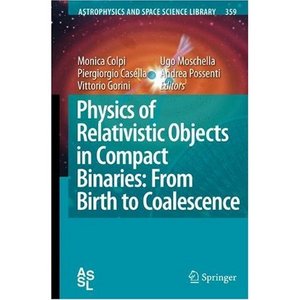
Physics of Relativistic Objects in Compact Binaries: from Birth to Coalescence


Physics of Relativistic Objects in Compact Binaries: from Birth to Coalescence 
Publisher: Springer | ISBN: 1402092636 | edition 2009 | PDF | 391 pages | 12 mb


This book provides a comprehensive, authoritative and timely review of the astrophysical approach to the investigation of gravity theories. Particular attention is paid to strong-field tests of general relativity and alternative theories of gravity, performed using collapsed objects (neutron stars, black holes and white dwarfs) in relativistic binaries as laboratories. The book starts with an introduction which gives the background linking experimental gravity in cosmic laboratories to astrophysics and fundamental physics. Subsequent chapters cover observational and theoretical aspects of the following topics: from binaries as test-beds of gravity theories to binary pulsars as cosmic laboratories; from binary star evolution to the formation of relativistic binaries; from short gamma-ray bursts to low mass X-ray binaries; from stellar-mass black hole binaries to coalescing super-massive black holes in galaxy mergers.

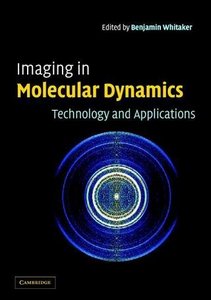
Imaging in Molecular Dynamics: Technology and Applications


"Imaging in Molecular Dynamics: Technology and Applications" by Benjamin J. Whitaker
Cambridge University Press | 266 pages | English | 2003 | ISBN: 0521810590 | PDF | 6,3 MB


Written in a tutorial style by some of the key practitioners in the field, this book provides a comprehensive account of charged particle imaging and describes many of its recent applications. The technique has revolutionized experimental studies of photodissociation and bimolecular collisions over the past couple of decades. It is of primary interest to researchers and graduate students working in chemical and molecular physics requiring an overview of the subject as well as ideas for future experiments.

Treatise on Natural Philosophy Part 1, Part 2 - Lord Kelvin

Un tratado de filosofía natural por el gran Lord Kelvin! Imperdible!!


Treatise on Natural Philosophy Part 1, Part 2 
Publisher: Cambridge University Press | ISBN: N/A | edition 1912 | PDF | 536, 514 pages | 28.9+28.7 mb

Descarga
Parte 1
Parte 2

The term Natural Philosophy was used by Newton, and is still used in British Universities, to denote the investigation of laws in the material world, and the deduction of results not directly observed. Observation, classification, and description of phenomena necessarily precede Natural Philosophy in every department of natural science. The earlier stage is, in some branches, commonly called Natural History; and it might with equal propriety be so called in all others. 

Rafael Ferraro, "Einstein's Space-Time: An Introduction to Special and General Relativity"


Rafael Ferraro, "Einstein's Space-Time: An Introduction to Special and General Relativity" 
Springer | 2007 | ISBN: 0387699465 | 310 pages | PDF | 5 MB


This is a textbook addressed to students in Physics and other people interested in Relativity and History of Physics. The book contains a complete account of Special Relativity that begins with the historical analysis of the reasons that led to a change in our manner of regarding the space and time. The first chapters are aimed to afford a deep understanding of the relativistic spacetime and its consequences for Dynamics. The chapter about covariant formulation includes the concepts of volume and hypersurfaces in manifolds, energy-momentum tensor of a fluid, etc., and prepares the language for General Relativity. The last two chapters are devoted to introduce General Relativity and Cosmology in a modern approach connected with the latest discoveries in these areas.

jueves, 30 de septiembre de 2010

Universe or Multiverse?

MU

Universe or Multiverse?
Cambridge University Press | September 14, 2009 | ISBN-10: 0521140692 | 534 pages | PDF | 3.4MB


Recent developments in cosmology and particle physics, such as the string landscape picture, have led to the remarkable realization that our universe - rather than being unique - could be just one of many universes. The multiverse proposal helps to explain the origin of the universe and some of its observational features. Since the physical constants can be different in other universes, the fine-tunings which appear necessary for the emergence of life may also be explained. Nevertheless, many physicists remain uncomfortable with the multiverse proposal, since it is highly speculative and perhaps untestable. In this volume, a number of active and eminent researchers in the field - mainly cosmologists and particle physicists but also some philosophers - address these issues and describe recent developments. The articles represent the full spectrum of views, providing for the first time an overview of the subject. They are written at different academic levels, engaging lay-readers and researchers alike.


Gravity - George Gamow

No puedo creer q exista este libro, loo mejor.. Es todo lo q dire..


George Gamow, "Gravity" 
Anchor Books | 2009 | ISBN: 1607961482 | 156 pages | PDF | 28,8 MB


A distinguished physicist and teacher, George Gamow also possessed a special gift for explaining the intricacies of science. Here he takes an enlightening look at three scientists whose work unlocked many of the mysteries behind the laws of physics: Galileo, the first to examine closely the process of free and restricted fall; Newton, originator of a universal force; and Einstein, who proposed that gravity is no more than the curvature of the four-dimensional space-time continuum. Most of the book is focused on Newton's ideas, with a concluding chapter on post-Einsteinian speculations concerning the relationship between gravity and other physical phenomena. This remarkably reader-friendly volume is graced with the author's own drawings, both technical and fanciful.
1962 Ed.


An Illustrated Guide to Relativity


Tatsu Takeuchi, "An Illustrated Guide to Relativity" 
Cambridge University Press |2010| ISBN: 0521763940 |266 pages|PDF | 3,7 MB


Aimed at both physics students and non-science majors, this unique book explains Einstein's special theory of relativity pictorially, using diagrams rather than equations. The diagrams guide the reader, step-by-step, from the basics of relativity to advanced topics including the addition of velocities, Lorentz contraction, time dilation, the twin paradox, Doppler shift, and Einstein's famous equation E=mc². The distinctive figures throughout the book enable the reader to visualize the theory in a way that cannot be fully conveyed through equations alone. The illustrative explanations in this book maintain the logic and rigour necessary for physics students, yet are simple enough to be understood by non-scientists. The book also contains entertaining problems which challenge the reader's understanding of the materials covered. 

Tensor Analysis with Applications in Mechanics

Muy buen libro, el análisis tensorial tan vital para el estudio de la topología y la relatividad general ahora enfocado a problemas de mecánica.. Se los recomiendo! Cheers!

Leonid P. Lebedev, Michael J. Cloud, "Tensor Analysis with Applications in Mechanics" 
World Scientific Publishing Company | 2010 | ISBN: 9814313122 | 380 pages | PDF | 2,1 MB


The tensorial nature of a quantity permits us to formulate transformation rules for its components under a change of basis. These rules are relatively simple and easily grasped by any engineering student familiar with matrix operators in linear algebra. More complex problems arise when one considers the tensor fields that describe continuum bodies. In this case general curvilinear coordinates become necessary. The principal basis of a curvilinear system is constructed as a set of vectors tangent to the coordinate lines. Another basis, called the dual basis, is also constructed in a special manner. The existence of these two bases is responsible for the mysterious covariant and contravariant terminology encountered in tensor discussions. A tensor field is a tensor-valued function of position in space. The use of tensor fields allows us to present physical laws in a clear, compact form. A byproduct is a set of simple and clear rules for the representation of vector differential operators such as gradient, divergence, and Laplacian in curvilinear coordinate systems. This book is a clear, concise, and self-contained treatment of tensors, tensor fields, and their applications. The book contains practically all the material on tensors needed for applications. It shows how this material is applied in mechanics, covering the foundations of the linear theories of elasticity and elastic shells. The main results are all presented in the first four chapters. The remainder of the book shows how one can apply these results to differential geometry and the study of various types of objects in continuum mechanics such as elastic bodies, plates, and shells. Each chapter of this new edition is supplied with exercises and problems - most with solutions, hints, or answers to help the reader progress. An extended appendix serves as a handbook-style summary of all important formulas contained in the book.


lunes, 27 de septiembre de 2010

Optical System Design Segunda Edición


Optical System Design Second Edition 
Publisher: Spie Press | ISBN: 0071593586 | edition 2008 | PDF | 828 pages | 48.68 mb

The design of imaging optical systems is an engineering discipline which has been practiced and written about for many years. In many ways, optical design is both a science and an art, and for this reason it is a technology that can cause problems if it is not done properly. Furthermore, most books on the subject tend to be complex and difficult to follow and to understand. With this book, we hope to bring the understanding of our discipline to everyone.

Descarga

FileSonic

domingo, 26 de septiembre de 2010

Higher Engineering Mathematics, Sexta edición por John Bird

Muy buen libro sobre matemáticas avanzadas para ingeniería. Libro nuevo del 2010, para usarlo paralelo con el Kreyszig y el James.


Links: 


John Bird's approach, based on numerous worked examples and interactive problems, is ideal for students from a wide range of academic backgrounds, and can be worked through at the student's own pace. Basic mathematical theories are explained in a straightforward manner, being supported by practical engineering examples and applications in order to ensure that readers can relate theory to practice. The extensive and thorough topic coverage makes this an ideal text for a range of university degree modules, foundation degrees, and HNC/D units.

Now in its sixth edition, Higher Engineering Mathematics is an established textbook that has helped many thousands of students to gain exam success. It has been updated to maximise the book's suitability for first year engineering degree students and those following foundation degrees. This book also caters specifically for the engineering mathematics units of the Higher National Engineering schemes from Edexcel. As such it includes the core unit, Analytical Methods for Engineers, and two specialist units, Further Analytical Methods for Engineers and Engineering Mathematics, both of which are common to the electrical/electronic engineering and mechanical engineering pathways. For ease of reference a mapping grid is included that shows precisely which topics are required for the learning outcomes of each unit.


Modern Physics - Serway

Muchos me han hablado sobre este libro, para los que no lo han conseguido acá se los posteo. Es un libro muy completo con bastantes problemas resueltos, muy recomendado para comenzar a estudiar física moderna.


Links:


This text presents an introduction to relativity, quantum mechanics, and statistical physics as well as applications of these theories to molecular physics, condensed matter physics, nuclear physics, particle physics, and cosmology. Writing in a student-friendly and accessible manner, the authors strike the perfect balance, mixing relevant applications (many new to this edition) with the appropriate level of theory. A new Web-based simulation software package, QMTools, complements the text and provides modeling tools to help students visualize abstract concepts. Icons are provided throughout the text to highlight areas in which this software can enhance understanding. 

martes, 21 de septiembre de 2010

A First Course in String Theory

Buen libro para adentrarse al mundo de la cuerdas. Cheers!


Links:


MegaUpload

An accessible introduction to string theory, this book provides a detailed and self-contained demonstration of the main concepts involved. The first part deals with basic ideas, reviewing special relativity and electromagnetism while introducing the concept of extra dimensions. D-branes and the classical dynamics of relativistic strings are discussed next, and the quantization of open and closed bosonic strings in the light-cone gauge, along with a brief introduction to superstrings. The second part begins with a detailed study of D-branes followed by string thermodynamics. It discusses possible physical applications, and covers T-duality of open and closed strings, electromagnetic fields on D-branes, Born/Infeld electrodynamics, covariant string quantization and string interactions. Primarily aimed as a textbook for advanced undergraduate and beginning graduate courses, it will also be ideal for a wide range of scientists and mathematicians who are curious about string theory.

Gravity from the Ground Up: An Introductory Guide to Gravity and General Relativity

Como les comente hace unos posts, este es el mejor libro introductorio relatividad general, cosmologpia y astrofísica. Es el mejor que he visto, el señor Bernard Shutz conocido por muchos por su obra general relativity y su nuevo libro en el cual intenta explicar el universo solo utilizando relatividad especial. Muy buen libro, bien ilustrado, muy muuy recomendado. Saludos! Diganme que les parece..


Link:


Gravity from the Ground Up
Cambridge University Press | 2003-11-30 | ISBN: 0521455065 | 488 pages | PDF | 5,8 MB

This book provides an accessible introduction to astronomy and general relativity, aiming to explain the Universe, not just to describe it. Written by an expert in relativity who is known for his clearly-written advanced textbooks, the treatment uses only high-school level mathematics, supplemented by optional computer programs, to explain the laws of physics governing gravity from

General Relativity and the Einstein Equations

Libro de relatividad general avanzado. Recomiendo empezar por libros más sencillos para una mejor comprensioón de esta obra.


Links:


General Relativity has passed all experimental and observational tests to model the motion of isolated bodies with strong gravitational fields, though the mathematical and numerical study of these motions is still in its infancy. It is believed that General Relativity models our cosmos, with a manifold of dimensions possibly greater than four and debatable topology opening a vast field of investigation for mathematicians and physicists alike. Remarkable conjectures have been proposed, many results have been obtained but many fundamental questions remain open. In this monograph, aimed at researchers in mathematics and physics, the author overviews the basic ideas in General Relativity, introduces the necessary mathematics and discusses some of the key open questions in the field.